


Repairing potholes
Significant progress is being made on repairing potholes in West Lothian.
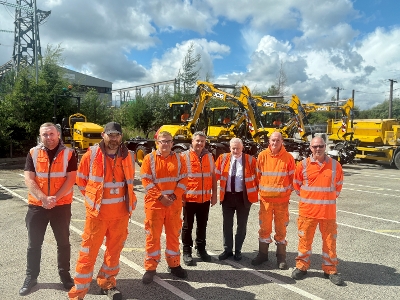
Earlier this year, West Lothian Council invested in new equipment and additional staff aimed at increasing the number of permanent pothole repairs. New dedicated pothole repair teams, along with the addition of three new Pothole Pro repair machines, have been put to work on carrying out permanent repairs on the road network. The new equipment will eventually result in three-times as many permanent pothole repairs being carried out going forward.
The investment is having a significant impact already. Since May, the percentage of permanent pothole repairs completed in West Lothian has increased significantly - May 2026 (30%) to August 2026 (75%).
Pothole repairs are broken down into emergency/temporary repairs and permanent repairs. Permanent repairs take significantly longer to undertake - with additional resources, time, planning and road disruption in comparison to temporary repairs.
In total, the council carried out 2,145 repairs in August. In the short term, whilst the new resources will not drastically impact the number of pothole repairs overall (temporary and permanent), they will significant increase the number of permanent repairs carried out. Over time, this will reduce the amount of potholes on West Lothian's roads.
The new Pothole Pro machinery that is being used excavates the surface from the road then sweeps and removes the excavated material and finally prepares the excavation for a permanent repair. This piece of equipment has been proven to speed up the repair process. Whilst the machines are an added benefit, our crews are still required to complete the permanent repairs by reinstating the excavations with new material. However, the new equipment will play an important role in helping the team to carry out more permanent potholes repairs.
Tom Conn, Executive councillor for the Environment & Sustainability said:
"Our roads crews undertake a number of roles; planned maintenance works, winter maintenance (gritting) and emergency roads maintenance. This is over and above carrying out pothole repairs.
"Previously, the available resources, combined with the volume of work and timescales for making safe, meant that it was not possible to undertake permanent repairs on the first visit - at the majority of locations. Our additional investment - announced in the budget earlier this year - will ensure that dedicated staff resources are available all year round to undertake permanent carriageway repairs - drastically increasing the amount of permanent repairs on our roads."
Potholes form when water seeps into tiny cracks in the road surface, usually caused by traffic. When this water freezes it expands and then, when it thaws, it gets smaller.
This makes the cracks larger, further weakening the road and increasing the amount of water that can get under the surface. As the road surface weakens, traffic breaks it up to create a small hole, which expands as more traffic passes over. This is why potholes are more prevalent during Winter.
The council has urgent deadlines are in place for higher priority defects. Those classed as critical risk are made safe within 24 hours and those classed as high risk are made safe within 7 days. During December 2025 and January 2026, 74% of all potholes fell within these categories, thereby triggering urgent response times for making safe. These are classed as temporary repairs (or patching).
Temporary repairs will remain an essential part of our pothole repair work. Our staff are aware of the importance of carrying out these works to the highest standard possible to keep roads safe and minimise repeat visits. Records are kept of all temporary repairs so that a programme of works can be put in place at a later date to carry out permanent works.
David Maule, the council's Head of Operational Services said:
"Our teams prioritise emergency road repairs and winter maintenance, and the additional investment will allow us to focus solely on road repairs and pothole fixes. We're confident that the additional investment will make a significant difference to West Lothian's road network and help ensure we have one of the best road networks in the country."


